Cumulative Exposure
Not every difficult call becomes a crisis. The repeated load of seeing, hearing, and managing difficult situations can still add up over time.
A Tactical Guide to Resilience for First Responders
For First Responders
Fire, EMS, law enforcement, dispatch, corrections, and other public-safety roles place unusual demands on attention, sleep, relationships, decision-making, and recovery. SOP4Stress is built to help you understand those pressures and develop practical ways to manage them over the course of a career.
You do not need generic advice about “handling stress better.” You need strategies that make sense in a job where sleep gets interrupted, difficult calls accumulate, people expect composure, and the next shift still starts on time.
Why This Work Is Different
First responders often become very good at functioning under pressure. That skill is essential on duty, but it can also make it easier to overlook what repeated stress is doing off duty. The goal is not to eliminate normal stress or make you less capable under pressure. The goal is to recognize patterns earlier, recover more effectively, and keep the job from taking more than it has to.
Not every difficult call becomes a crisis. The repeated load of seeing, hearing, and managing difficult situations can still add up over time.
Shift schedules, overnight calls, mandatory overtime, and disrupted recovery can affect patience, concentration, mood, and decision-making.
Hypervigilance, irritability, emotional distance, and difficulty switching gears can follow you home even when you want work to stay at work.
Exhaustion, frustration, detachment, and feeling like nothing changes can develop gradually and begin to feel like part of the job.
The habits that help you shut things off quickly are not always the habits that help you recover well over the long term.
Leadership problems, staffing, politics, conflict, public scrutiny, career uncertainty, and loss of purpose can be as draining as difficult incidents.
Start Here
You do not need to solve everything at once. Choose the issue that feels most relevant right now and use that as your entry point.
A Practical Approach
Being resilient does not mean never being affected. It means having repeatable ways to notice the load, recover from it, respond to warning signs, and protect what matters outside the job.
Learn your own early warning signs instead of waiting for a major problem to force your attention.
Build routines that support sleep, decompression, physical recovery, and a real transition out of work mode.
Use practical coping tools, honest conversations, peer support, and professional resources when the situation calls for them.
Protect relationships, identity, purpose, and the parts of your life that cannot be replaced by the job.
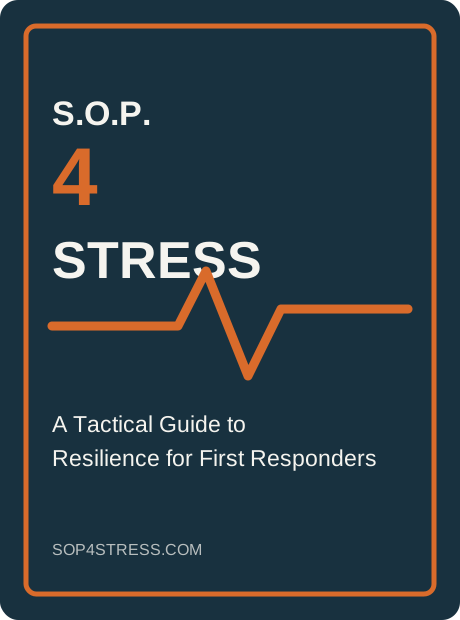
Theme artwork — replace with the official book cover when ready.
Go Deeper
The resource library lets you start with one problem. The book brings the larger system together.
S.O.P. 4 STRESS is designed for responders who want a practical framework for understanding occupational stress, strengthening recovery, improving coping, and protecting their ability to perform without giving the job unlimited access to the rest of their lives.
Recommended for First Responders
Assign the “First Responders” audience to any post in WordPress and it can appear here automatically.
Night-shift sleep is difficult by biology and by circumstance. Improve the environment instead of relying on willpower.
Everyone has rough stretches. Burnout becomes more concerning when exhaustion, cynicism, and reduced effectiveness become the new baseline.
Peer support works best when its role is clear: connection, listening, practical support, and referral—not amateur diagnosis.
Overtime can solve real financial and staffing needs, but chronic overextension can quietly become part of identity and strain recovery.
The transition from operational mode to home life is not always immediate. A deliberate handoff can reduce conflict and emotional spillover.
Retirement is not only a financial event. It can change identity, routine, social connection, purpose, and family dynamics.
One More Thing
Sometimes better sleep, stronger boundaries, exercise, peer connection, or a change in routine is enough to improve the situation. Sometimes the load is bigger than a self-management strategy. A trusted peer, EAP, clinician, chaplain, medical professional, or other qualified resource can be part of a practical response when you need more support.
SOP4Stress provides educational information and is not a substitute for medical, mental-health, or emergency care.
Keep Building
Use the resource library to work on the issue in front of you, or use S.O.P. 4 STRESS to build a broader resilience framework for the career ahead.